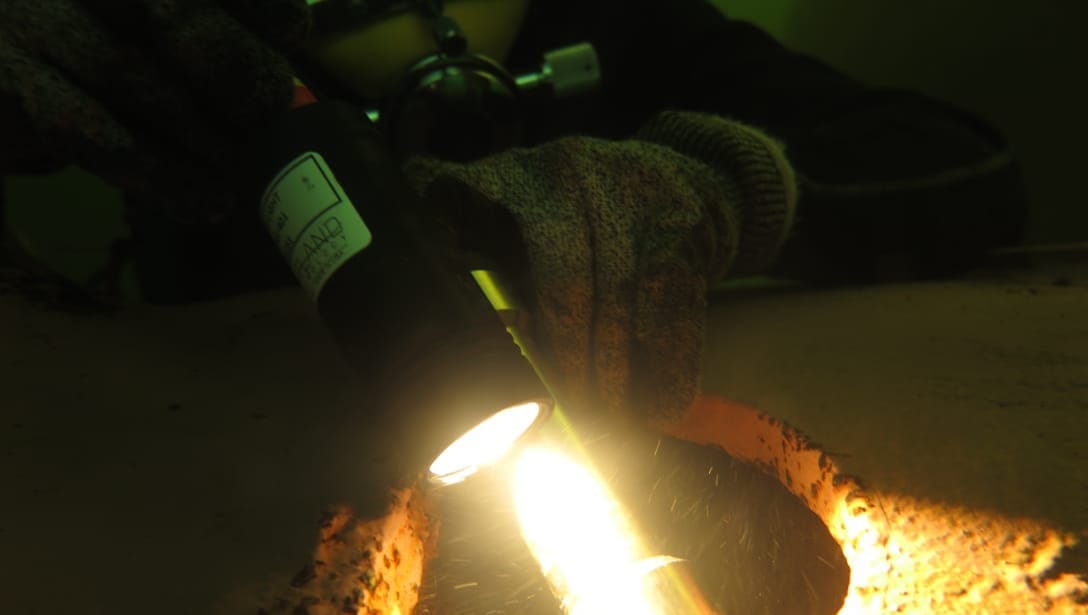
This specific case study focuses on a vital aspect of vessel maintenance: the inspection of the propeller and stern tube. This service is crucial for ensuring a vessel’s operational efficiency, safety, and compliance with maritime regulations.
Here’s what this inspection involves:
- Propeller Inspection: Our team examines the propeller blades for any signs of damage. This includes looking for cracks, chips, nicks, or bending that can be caused by impacts with debris or other objects. We also check for marine growth, which can significantly reduce the propeller’s efficiency and increase fuel consumption. The inspection can be done visually or with specialized tools, such as an ROV (Remotely Operated Vehicle), to provide a detailed, high-resolution view of the propeller’s surface.
- Stern Tube Inspection: The stern tube is the hollow shaft that houses the propeller shaft, connecting it to the main engine inside the vessel. This inspection checks for leaks in the seals, which are critical for preventing seawater from entering the engine room and lubricating oil from leaking out. We look for any signs of water ingress, damage to the seals, or abnormal wear and tear that could indicate a larger mechanical issue.
Why is this inspection important?
- Fuel Efficiency: A damaged or fouled propeller is less efficient, leading to increased fuel consumption and higher operating costs.
- Safety: Undetected damage to the propeller or stern tube can lead to catastrophic failure, risking the vessel’s safety and environmental damage from oil leaks.
- Maintenance Planning: Regular inspections allow for early detection of issues, enabling proactive maintenance that is more cost-effective than emergency repairs.
- Class Compliance: These inspections are often required by classification societies to ensure the vessel’s seaworthiness and maintain its certification.
By performing this service, Sleipnir Offshore helps vessel owners maintain the integrity and efficiency of their fleet, preventing costly breakdowns and ensuring smooth, safe operations.